

Grade / LVL
Language
Grade 4
Mi'gmaw
August 1, 2021
Date Created:
Date Updated:
August 12, 2026
Topics
Animals & insects ( birds, fish, cat, farm animal)
Description
ILLUSTRATED BY : JAMIE ARSENAULT
LEONARD ARSENAULT
ROSEANN MARTIN
L.M.F.N.G Education and Culture Directorate
1998
Formats available
Booklet, Document
NOTE
Please note that not all formats are available at the moment - it's a work in progress.
Note that the documents are created and translated for immersion only, Mi'gmaw being prioritized.
On this page you can find the rough translation in english and/or french.
We encourage you to submit your suggestions, reviews, ideas or completed work to the LED communication team.
Mi'gmaw
Language translated:
Text:
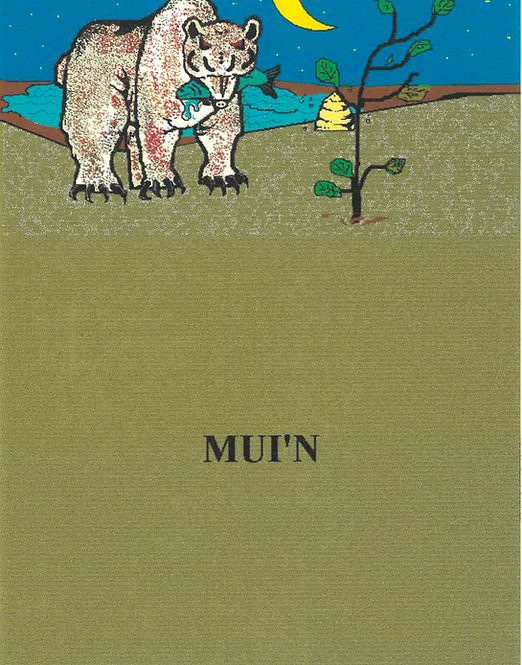
Mui’n
p. 2
Gi’s gi’l nemi’t maqtawe’g mui’n gesig? Suel ‘ms’t mui’naq geitaqamiga’sultijig gesigl. Mui’naq eltu’titl ‘msgeguoml ta’n tlne’p’titaq. Mui’naq mu etlatalulti’gw ‘msgeguomigtug aqq mu tewita’gwig ugjit mijjultinew. Wetatalultijig na mijipjewei mawo’tu’tip ugtinnewaq newtinipg.
p. 3
Ta’n tujiw nipg, mui’n na malqutg tepiaq mijipjewei ugjit sapa’lugun newtipug. Wigew na mawiaq lame’g mui’n wa’qeig. Na wigew aqq ma’w mui’n ugtanguoweim apoqonmaj ulp’sin gesigl gulaman sapawsin. Ta’n tujiw wi’sis nepaj newtipug, ginu telwi’tmu’g geitaqamiga’sit.
p. 4
Mui’ne’jg na ugs’tqamuultijig gesig ge’s giju’ mui’n eig ‘msgeguomigtug. Mui’ne’jg welp’sagwi’tij uggwijual ugtanguoweim. Mui’ne’jg weja’tu’tij wilu’ow Giju’ mui’nal. Giju’ mui’n nusesgwalaji mui’ne’jg.
p. 5
Giju’ mui’n aqq Unjanji’jg
Ta’n tujiw siggw iga’q, ula giju’ mui’n alu’sat aqq gewising. Negm naqt’g wiguow aqq nespnaji unjanji’jg. Giju’ mui’n na angweiwaji unjanji’jg tapuipunqeg, gegnu’tmuaji ta’n telwe’jitmg wilu’ow aqq ta’n tliangweiasultitaq enmiaq iga’tij ‘nsanoqonigtug. Mui’naq na malquttaq ta’n telmila’mu’g nme’juei, glitaq, mijipjamuejapu, juji’ji’jg aqq alt wi’sisji’jg.
p. 6
Iga’tu glusuaqan ugjit tetaputen ta’n goqwei ewi’gas’g.
mui’ne’j
ugtanguoweim
nusesgwalaji
tapuipunqeg
‘msgeguom
wigew
gesig
nme’ji’jg
geitaqamiga’sit
siggw
1. Apje’jit mui’n telwi’tut __________________________________.
2. Giju’ mui’n ____________________________________ mui’ne’jg.
3. Mui’ne’jg ugs’tqamuultijig _______________________________.
4. Mui’naq wigpa’tiji ______________________________________.
5. Mesgilultijig mui’naq mimaju’nugwi’tij _______________ gesig.
6. Mui’n ___________________________ apoqonmaj ulp’sin gesig.
7. Ta’n tett mui’naq etlne’p’ti’tij telwisig _____________________.
8. Ta’n tujiw mui’n newtipug nepaj teluemg __________________.
9. Mui’naq tewita’jig wiguowaq _____________________________.
10. Giju’ mui’n angweiwaji mui’ne’jg __________________________.
EXTRA (not in book)
nme’juei - fish food
p’sultijig - they are warm
sapa’lugun will survive
siaw continuew
tapuipunqeg two years
telpita’q length
telui’tmu’g we call ( name ) it
telwe’jitmg found as
tewita’gwig will not come out ( prefix ma )
uggwijual their mother
uggwijuowei - belonging to their mother
ugs’tqamultijig - when they are born
ugtanguoweimm - his fur
ugtining - within his being
ugtinnewaq within their being
ulp’sin nepaj - warm when asleep
unjanjji’jg - his offspring
wa’qaig - on his skin
wejimijjultijig - eat from
wetatalultijig - eats coming form
wi’sisji’jg - little animal
wigew - fat
wilu’ow - their food
alu’ast - lean, skinny
amuapu - honey
angweiasultitaq - they care fore themselves
angweiwaji - take care of them
apoqonmaj - helps them
e’w’g - he uses it
elg- also
etlatalulti’gw - we are eating
geitaqamiga’sit shekter one’s self in the bushes or the lake
malqutg - he eats it; will eat it
maqtawe’g - it is black
mawiaq - gathers
mawo’tu’tip they gathered it
mijjultinew - when they eat
mimajin - when alive
mlagejg - milk
msgeguomigtug - bear’s den
naqt’g - leaves it
ne’p’tijig - they sleep
nemi’t- you see him
nespnaji - takes them with him
nme juei - fish food
p'sultijig they are warm
sapa' lugun will survive
siaw continues
tapuipunqeg two years
telpita’q length
telui’tmu'g we call (name) it
telwe jitmg found as
tewita'gwig will not come out (prefix "ma'')
uggwijual their mother
uggwijuowei belonging to their mother
ugs'tgamultijig when they are born
ugtanguoweimm his fur
ugtining within his being
ugtinnewad within their being
ulp'sin nepaj warm when asleep
unjanjjijg his offspring
wa'qaig on his skin
wejimijjultijig eat from
wetatalultijig eats coming from
wisisjig little animals
wigew fat
wilu'ow their food
IGA' TU TETAPUTEG GLUSUARAN TA'N PANTETEG UGJIT
TETAPUTEN TA'N EWI' CAS' G
Mui’ne’j msgeguom nme'jijg
anguowei wigew geitaqamiga'sit
mlagejg gesig siggw
tapuipunqeg
1. Qopisun mui'n na telui’tut__________.
2. Mui'ne'j esamuqwaji ________________ uggwijewe'g.
3. Mui’ne'ig ugs'tqamultijig________________.
4. Mui'naq wigpa 'tiji___________________.
5. Mesgilultijig mui'naq mimaju'nugwitij _____________gesig.
6. Muine'jg angweiagwi tiji uggwijuei_____________________.
7. Mui'n pas'g __________________apoqonmaj ulp'sin gesig.
8. Ta'n mui'naq etl ne'p'ti tij teluisig_____________________.
9. ___________________na teluegeg nepat ta'n telpita'q gesig.
10. Mui’naq tewita'jig wiguouag________________________.
BLACK BEAR
Did you ever see a black bear in the winter? Almost all
bears hibernate in the winter. Bears build their den where
they will sleep. Bears do not eat in their den nor go out for
eating. They get their energy from food they stored within
their being the whole summer long.
In the summer, the bear eats enough food to last him the
whole winter. The fat is accumulating within the bear's skin.
This fat, and also his fur, aids him to stay warm in the winter
in order to survive. When the animal sleeps all winter long,
we call it hibernation.
Cubs are born in the winter when the mother bear is in
the den. Cubs get their warmth from their mother's fur. Cubs
get their food energy from their mother's milk.
Mother Bear And Her Cubs
When spring arrives, this mother bear is very lean and
hungry. She leaves her dwelling place and takes her cubs with
her. Mother bear looks after her cubs for two years, she
teaches them how to find food and how they will care for
themselves when in danger. Bears will eat all kinds of fish,
berries, honey, ants, and other little animals.


